
Middle East Conflict, Rising Oil Prices and UK Delivery Costs
Moe Abbas, founder of DropYou, explains how oil-market uncertainty can affect UK delivery budgets and why flexible courier capacity matters.
On this page
- Oil Prices Are Rising Again — and UK Businesses Could Feel the Impact
- Why Is the Middle East Conflict Affecting Oil Prices?
- The Hidden Impact on UK Delivery Fleets
- Could UK Diesel Prices Rise Further?
- Is Owning More Delivery Vehicles Still the Best Solution?
- Introducing DropYou: A Smarter Way to Access UK Delivery Capacity
- Already Have Your Own Fleet? DropYou Can Work Alongside It
- How DropYou Can Help Businesses Manage Rising Transport Costs
- 1. Avoid Unnecessary Fleet Expansion
- 2. Compare Delivery Prices
- 3. Access Nationwide Delivery Capacity
- 4. Manage Unexpected Demand
- 5. Maintain Delivery Visibility
- Why Flexible Logistics Could Become More Important in 2027
- DropYou: Built for a Changing Logistics Industry
- Rising Fuel Prices? Don't Let Delivery Costs Hold Your Business Back.
As conflict in the Middle East continues to disrupt global energy markets, UK businesses are facing renewed pressure from rising oil prices. With fuel costs threatening transport budgets, could flexible delivery networks offer a smarter way forward?
Oil Prices Are Rising Again — and UK Businesses Could Feel the Impact
The ongoing conflict in the Middle East is creating fresh uncertainty across global oil markets, with concerns growing over supply disruptions, shipping routes and the possibility of further price increases.
Oil supply and shipping risks can affect crude prices, but an oil-market headline is not a direct measure of what a UK fleet pays at the diesel pump.
For UK businesses, this isn't simply another international news story.
It's a warning that the cost of transporting goods could become increasingly unpredictable.
From manufacturers and retailers to construction companies and independent businesses, rising fuel prices can affect everything from supplier costs to customer deliveries.
And for businesses operating their own fleets of vans and commercial vehicles, the financial pressure can be even greater.
Why Is the Middle East Conflict Affecting Oil Prices?
The Middle East plays a critical role in global energy production and transportation.
One of the most important routes is the Strait of Hormuz, a narrow shipping passage connecting the Persian Gulf to international markets.
Disruption to this route can significantly affect the global oil supply chain. The International Energy Agency’s Strait of Hormuz overview explains why the passage matters to oil exports from the region.
The ongoing conflict has raised concerns about the security of oil tankers, shipping infrastructure and the reliability of supply routes.
The IEA’s Middle East shipping monitor tracks changes in shipping flows during the conflict.
When traders anticipate potential supply shortages, oil prices can rise even before further physical disruptions occur.
And when oil prices increase, the consequences can eventually reach UK petrol stations, diesel pumps and transport operators.
Although changes in crude oil prices don't translate directly or immediately into equivalent changes at the pump, sustained increases can place upward pressure on UK fuel costs.
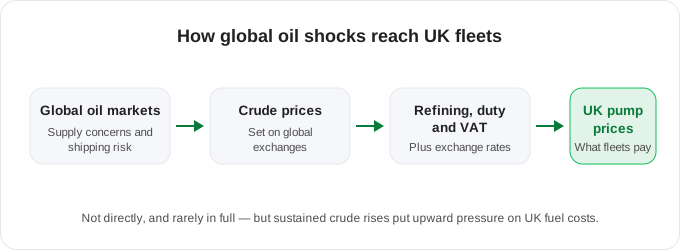
For businesses relying on road transport, that uncertainty makes budgeting and planning considerably more difficult.
The Hidden Impact on UK Delivery Fleets
Imagine a manufacturing business operating ten delivery vans.
Each van travels approximately 150 miles per working day.
Assuming an average fuel efficiency of 30 miles per gallon, the fleet would consume roughly 227 litres of diesel daily.
Now imagine diesel prices increase by just 15p per litre.
£34.10
Extra diesel cost per working day for a ten-van fleet
£750.10
Extra diesel cost over a 22-working-day month
£8,865.18
Extra diesel cost over a 260-working-day year
| Period | Additional diesel cost |
|---|---|
| One working day | £34.10 |
| A 22-working-day month | £750.10 |
| A 260-working-day year | £8,865.18 |
Calculation: (10 × 150 miles ÷ 30 mpg) × 4.54609 litres per UK gallon = 227.3045 litres per day. Multiply by £0.15 per litre, then by the number of working days. Totals use unrounded daily consumption. These are illustrative increases, not current diesel prices or a forecast.
Illustrative calculation based on ten vans, 150 miles per van per day, 30 mpg (UK gallons) and a 15p-per-litre fuel increase.
And that's before considering any additional costs passed on by suppliers, subcontractors or other transport providers.
For businesses operating 20, 50 or even 100 vehicles, the financial impact could be substantially greater.
Fuel costs are only one part of running a fleet.
Companies must also consider vehicle finance, insurance, maintenance, repairs, driver salaries, servicing and vehicle downtime.
The more vehicles a business owns, the more exposed it can become to changes in operating costs.
Could UK Diesel Prices Rise Further?
The possibility remains.
The direction of fuel prices will depend on several factors, including developments in the Middle East, global oil production, shipping disruptions, refining capacity and exchange rates.
For current UK pump-price averages, consult the government’s weekly road fuel prices. These national averages provide context; use your actual fuel invoices when budgeting for your fleet.
Supply changes, shipping conditions and sterling exchange rates can move costs in either direction. This article does not predict a particular pump price.
For UK businesses, the challenge is not necessarily predicting exactly how expensive diesel will become.
It's ensuring their operations can withstand sudden changes.
And that starts with reviewing how delivery capacity is managed.
Is Owning More Delivery Vehicles Still the Best Solution?
Traditionally, when a business experiences increased delivery demand, the response might be to purchase another van or recruit another driver.
But adding vehicles creates additional commitments.
What happens when demand falls?
What happens when fuel prices rise?
What happens when vehicles spend hours sitting idle?
Or when a driver is required for only a handful of urgent deliveries each week?
Flexible capacity
- No fixed monthly costs — you pay per job booked
- Scales down automatically when demand falls
- Extra capacity available when demand spikes
- Fuel-price exposure contained to the jobs you book
Owning more vehicles
- Finance, insurance, VED, maintenance and driver salary every month
- Vehicles and drivers sit idle when demand falls
- Limited to the vehicles you already own during spikes
- Fuel-price exposure multiplied across every vehicle
Businesses need to consider whether expanding their own fleets is always the most cost-effective solution.
We covered the wider cost picture in our guide to rising fuel costs and UK delivery fleets, including how fuel duty, insurance and clean air zones stack up.
Sometimes, the smarter decision is to access additional delivery capacity only when it's needed.
That's where DropYou comes in.
Introducing DropYou: A Smarter Way to Access UK Delivery Capacity
DropYou™ is a UK logistics technology platform connecting businesses and consumers with a nationwide network of independent drivers and courier partners.
Rather than requiring businesses to expand their own fleets, DropYou provides access to additional delivery capacity through a digital marketplace.
Businesses can request a delivery through DropYou’s business courier service, receive bids from available drivers, compare prices and select the option that works best for their requirements.
The platform supports a range of vehicles, from small vans through to larger commercial vehicles, including Luton vans and 7.5-tonne vehicles. Check the available courier vehicle types against your load and collection requirements.
Whether it's an urgent automotive component, manufacturing equipment, retail stock or a time-critical customer order, DropYou offers another way to arrange transport.
The objective is simple: give businesses access to the delivery capacity they need, without requiring them to own every vehicle themselves.
Already Have Your Own Fleet? DropYou Can Work Alongside It
One of the biggest misconceptions about on-demand logistics is that businesses must choose between operating their own fleet and outsourcing deliveries.
They don't.
DropYou can work alongside an existing transport operation.
Imagine your company operates five vans.
Four are already out delivering customer orders.
The fifth is unavailable because of maintenance.
An urgent collection suddenly comes in.
Traditionally, you might have to rearrange routes, delay another customer or pay a premium for an emergency courier.
With DropYou, you can request additional capacity through the platform and compare available driver bids.
Your existing fleet continues operating as normal.
DropYou provides an additional option when required.
This approach can be particularly useful for businesses facing unpredictable demand, seasonal peaks, vehicle breakdowns or driver shortages.
How DropYou Can Help Businesses Manage Rising Transport Costs
1. Avoid Unnecessary Fleet Expansion
Instead of purchasing another vehicle to cover occasional demand, businesses can access additional drivers when required.
This may help reduce the need for further fixed fleet commitments.
2. Compare Delivery Prices
DropYou's driver bidding marketplace allows businesses to review available quotations before selecting a delivery option.
This provides greater visibility over individual delivery costs. Our courier pricing guide explains the factors to consider when comparing options, and our guide to how much a courier costs in the UK sets out typical price ranges.
3. Access Nationwide Delivery Capacity
With access to drivers across the UK, businesses can request collections and deliveries without relying exclusively on their own vehicles.
Capacity is available in cities and towns nationwide — from same-day couriers in London and Manchester to Birmingham and beyond — including busy corridors such as the Manchester to London route.
4. Manage Unexpected Demand
When urgent orders arrive or existing drivers are unavailable, DropYou offers an additional route to finding delivery capacity.
5. Maintain Delivery Visibility
Businesses can use DropYou's digital tracking and proof-of-delivery features to monitor shipments and confirm completion.
While DropYou cannot eliminate fuel-price increases or guarantee that every delivery will cost less, its flexible marketplace gives businesses another way to manage transport demand and compare options.
Need an urgent UK delivery?
Get live courier quotes from available drivers and choose the option that works for your job.
Why Flexible Logistics Could Become More Important in 2027
The uncertainty surrounding global energy markets highlights a broader challenge facing UK businesses.
Transport costs can change rapidly, but customer expectations remain high.
- Manufacturers still need components delivered.
- Retailers still need stock moved.
- Construction projects still need materials.
- Customers still expect orders to arrive on time.
When operating costs rise, businesses don't need more complications. They need delivery operations that flex with demand — without betting on a bigger fleet.
Businesses therefore need delivery operations that can adapt to changing economic conditions.
For some companies, that means improving route planning and vehicle utilisation.
For others, it means reducing unnecessary journeys or reviewing existing courier contracts.
And for businesses with fluctuating demand, it may mean combining an existing fleet with on-demand logistics capacity. If you are reviewing providers, our guide to choosing a courier service sets out the questions worth asking.
The future of business logistics isn't necessarily about owning more vehicles. It's about making better use of the capacity already available.
DropYou: Built for a Changing Logistics Industry
At DropYou, we believe businesses should have greater flexibility when arranging deliveries.
Our technology is designed to simplify the process of finding suitable drivers, comparing quotations and managing deliveries.
As the UK logistics industry faces pressure from fuel costs, labour expenses and changing customer expectations, digital marketplaces can provide businesses with additional options.
We're continuing to develop DropYou to support businesses across manufacturing, retail, automotive, construction, distribution and e-commerce.
Our ambition is to make moving goods across the UK simpler, more transparent and more accessible.
Because when operating costs rise, businesses need solutions that help them adapt.
Not more complications.
Rising Fuel Prices? Don't Let Delivery Costs Hold Your Business Back.
Whether you operate your own fleet, use an existing courier company or regularly need additional transport capacity, DropYou is here to help.
Keep your existing fleet. Keep your trusted couriers. Add DropYou as your flexible delivery partner.
Request deliveries, compare driver bids and access a nationwide network of delivery professionals.
Get a delivery quote with DropYou
DropYou™ — Smart. Scalable. Same-day.
For a broader look at operating costs and overflow planning, read our guide to rising fuel costs and UK delivery fleets.
On this page
- Oil Prices Are Rising Again — and UK Businesses Could Feel the Impact
- Why Is the Middle East Conflict Affecting Oil Prices?
- The Hidden Impact on UK Delivery Fleets
- Could UK Diesel Prices Rise Further?
- Is Owning More Delivery Vehicles Still the Best Solution?
- Introducing DropYou: A Smarter Way to Access UK Delivery Capacity
- Already Have Your Own Fleet? DropYou Can Work Alongside It
- How DropYou Can Help Businesses Manage Rising Transport Costs
- 1. Avoid Unnecessary Fleet Expansion
- 2. Compare Delivery Prices
- 3. Access Nationwide Delivery Capacity
- 4. Manage Unexpected Demand
- 5. Maintain Delivery Visibility
- Why Flexible Logistics Could Become More Important in 2027
- DropYou: Built for a Changing Logistics Industry
- Rising Fuel Prices? Don't Let Delivery Costs Hold Your Business Back.
Explore DropYou delivery services
Frequently asked questions
How could Middle East conflict affect UK diesel prices?
Crude oil is priced on global markets, and concerns about supply disruptions in the Middle East can push those prices higher. UK pump prices tend to follow sustained movements in crude prices, although changes rarely pass through immediately or in full.
Should a UK business expand its fleet while fuel prices are rising?
Not necessarily. Adding vehicles creates fixed costs for finance, insurance, maintenance and drivers, whether or not the work arrives. Many businesses instead keep their existing fleet and use flexible courier capacity for overflow and urgent jobs.
How can DropYou help with rising delivery costs?
DropYou lets businesses request additional delivery capacity when they need it, compare quotes from available drivers and book only the jobs they require, with no subscription and no long-term commitment.
Is the diesel cost example in this article a forecast?
No. The worked example is illustrative. It shows how a 15p-per-litre increase could affect a ten-van fleet, using average figures for distance and fuel efficiency. Actual costs depend on your own mileage, fuel consumption and local pump prices.
Can DropYou work alongside an existing fleet?
Yes. Businesses can keep their own vehicles and regular couriers, and use DropYou when demand exceeds available capacity, a vehicle breaks down or an urgent job arrives.
Need extra delivery capacity?
Book a courier through DropYou and compare available options for your delivery.
Get Live QuotesNo subscription. No commitment. Book one delivery or a hundred.